
ALASKA LNG
An Old Idea That Still Doesn’t Work
Since the 1960s, every attempt to build a North Slope gas pipeline has failed to attract investors or buyers. The Alaska LNG project (AK LNG) is the latest version of this decades-old idea—an 807-mile pipeline carrying methane (“natural gas”) from the North Slope to an export terminal in Nikiski, where it would be chilled into liquefied natural gas (LNG) and shipped to Asia.
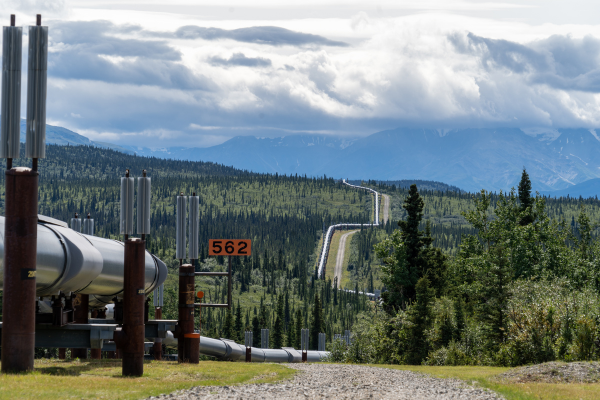

AK LNG: Key Facts
- Cost: Estimated $44 billion—before inflation or tariffs.
- Ownership: The State of Alaska holds just 25%.
- Route: Crosses earthquake-prone areas and Cook Inlet beluga whale habitat.
- Emissions: Operating the project would release 16.3 million tons of CO₂ annually—four times more than all Alaska’s passenger vehicles combined.

AK LNG Isn’t a Solution to Cook Inlet’s Gas Problem
AK LNG won’t be ready before 2030 — too late to address rising fuel prices and gas shortages in Southcentral Alaska.
The project can’t move forward unless overseas buyers agree to purchase its gas — and so far, interest has been weak and nonbinding.
We can’t control decisions made in foreign markets, but we can choose to invest in local renewable energy right now.
Even a fraction of the money spent chasing this pipeline could dramatically reduce Alaska’s gas use over the next decade.

The $44 Billion Project Isn’t Economic
Global LNG supply is expected to exceed demand in the 2030s, making AK LNG both unnecessary and unprofitable. Despite more than $470 million in state spending since 2010, the project still lacks investors and depends on massive taxpayer subsidies, including federal loan guarantees and property tax breaks.
Without these subsidies, AK LNG would fail in the open market — and even with them, its economics are shaky.

Betting on Climate Failure
Investing in LNG is a bet on climate policy failure. Just when the world needs to phase out fossil fuels, AK LNG would be under pressure to ramp up exports to recover its massive start-up costs.
Scientists agree that carbon emissions must fall 40–60% by 2030 to avoid the worst impacts of global warming. Yet AK LNG’s export license would keep it selling gas into the 2060s — decades past global goals for net-zero emissions.
Making the world safe for LNG makes it dangerous for our future.

AK LNG Would Deepen the Climate Crisis
If built, AK LNG could raise Alaska’s total carbon emissions by one-third. Over its 30-year lifespan, the gas AK LNG exports would generate 3.2 billion metric tons of CO₂ — triple Alaska’s annual emissions.
Federal regulators approved the project based on the flawed assumption that Alaskan gas would replace coal in Asia. But as affordable renewable energy grows in countries that historically relied on coal, that assumption no longer holds.
Politics, Not Markets, Keep AK LNG Alive
AK LNG has survived thanks to political pressure, not market demand. Since Russia’s invasion of Ukraine, the U.S. federal government has promoted LNG exports as a tool of global diplomacy. The Trump administration pressured allies like Japan and Taiwan to support AK LNG — but so far, their commitments remain vague and nonbinding, motivated more by fear of trade retaliation than genuine need.
In reality, true energy independence — for Alaska and our Pacific allies — comes from investing in local, renewable energy projects, not doubling down on fossil fuel dependence.
A Better Path Forward
Renewable Energy Can Fill the Energy Needs of Tomorrow
Redirecting public funds and political energy toward renewable, homegrown solutions would do far more to secure Alaska’s energy future, strengthen local economies, and protect the climate.
There are already a variety of cost-effective renewable energy options available, including solar, wind, geothermal, and sustainable hydro power.
Cook Inletkeeper stands firmly against the Alaska LNG project — and for a future powered by clean, local energy.
Blogs on Alaska LNG Through the Years
The Planet Burners Come for Tikahtnu
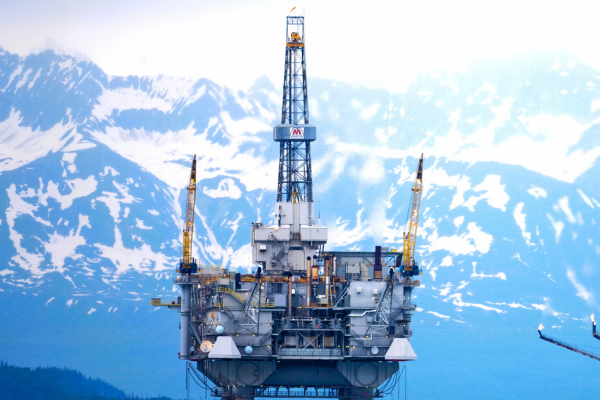
Every oil spill begins with a lease sale. Every rig, every tanker, every trench brings us closer to the day Tikahtnu is transformed from a vibrant, life-sustaining watershed into an industrial sacrifice zone. But this fight is not over. We have stopped ill-conceived projects before, and with your voice and action, we can do it again!
Alaska LNG Still Has Big Questions to Answer
The Alaska LNG project would build an 800-mile pipeline from North Slope natural gas fields to an export terminal in Nikiski. For many years, its various backers have been coming to tell us the gas line is inevitable and imminent, and to explain why “this time is different.” On Oct. 8, 2025 it was Glenfarne’s turn.

Alaska LNG owes Alaskans basic answers
AKLNG will be holding a Community Open House in Nikiski on October 8. The project’s proponents, including private developer Glenfarne and the state-owned Alaska Gasline Development Corporation, owe Alaskans answers on what their tenuous megaproject will cost and how far the state is obligated to share that cost.
AKLNG: Dirty deeds (not) done
On Thursday, Feb. 27, tell the Senate Finance committee to invest state dollars in real value for Alaskans instead of the gasline mirage. Senate Finance will take public testimony on the budget from Anchorage, Matanuska-Susitna Valley, and Kenai...
Investing in LNG is a Bet on Climate Policy Failure
The Paris Agreement seeks to limit global temperature rise to 1.5°C above pre-industrial levels to give the planet a decent chance of avoiding the worst outcomes of climate change. To hit this target, the Intergovernmental Panel on Climate Change calls for reducing...
We Are Not the Last Frontier for Resource Development
The Biden administration just approved exports from the Alaska LNG project, another carbon bomb that will lock us into 30 more years of planet-warming emissions. This massive $38 billion project involves building an 800-mile natural gas pipeline from the North Slope...